Generic AI knows the language. ShopVoices knows your shelves.
A shopper doesn't ask for "a cordless vacuum cleaner, model VX11-2" — they ask for "sådan en ledningsfri støvsuger". The Console tunes the assistant to your catalogue — your brands, your product names, the way your shoppers actually talk — and measures the result on your own products before anything reaches the floor.
Your team can run this. No specialists required.
Getting an assistant to speak your assortment sounds like a machine-learning engagement. It isn't. The Console walks whoever owns it through the work in order, shows how ready each store is at a glance, and quietly handles the routine upkeep in the background. Most of the effort is reviewing what it proposes and pressing publish.
- Readiness is visible per store, so nobody has to guess where a rollout stands.
- Every step explains itself in plain language and links straight to the work.
- We do the first pass with you during a pilot — you keep it current after that.
It hears your brand names the way shoppers say them
Point the Console at your catalogue and the assistant learns your assortment — the brand names, the model lines, the Danish a generic system gets wrong. Nothing reaches the floor until someone on your side signs it off, and every device in the store then speaks the same catalogue. Your range moves; it keeps up.
- Built from your own product data, not a generic dictionary.
- Your sign-off before anything reaches the floor.
- Danish-first, not Danish as an afterthought — and it shows.
Teach it that "hoover" means vacuum cleaner
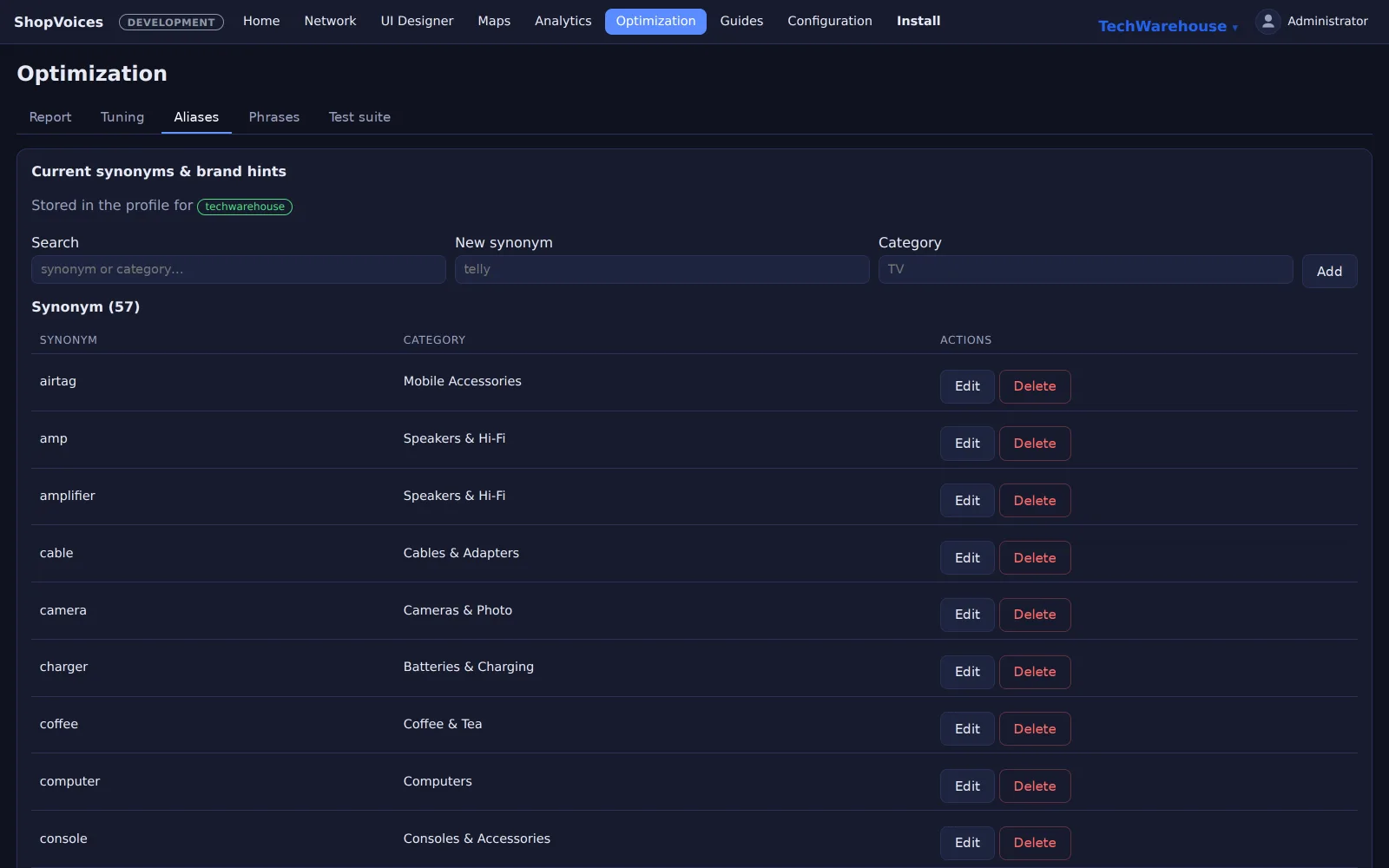
Every chain has its own shopper vocabulary — nicknames, abbreviations, the competitor's brand used as a generic word, the thing everyone in one region calls something else. You keep that list, in plain language, and the assistant answers to all of it. Add a word, and every screen in the store understands it.
Nothing ships to the floor that scores worse than what's already there
Recognition quality is not a matter of opinion here. Changes are checked against your own products, in your own languages, before they reach a single shopper — and anything that would make the assistant worse simply doesn't go live. In a pilot we'll put the ten product names your staff say get misheard most in front of it, and you can watch.
- Measured on your catalogue, not on a generic benchmark.
- Improvements ship; regressions don't. That gate is automatic.
- Accuracy on your own products becomes a written pilot criterion.
The understanding report closes the loop
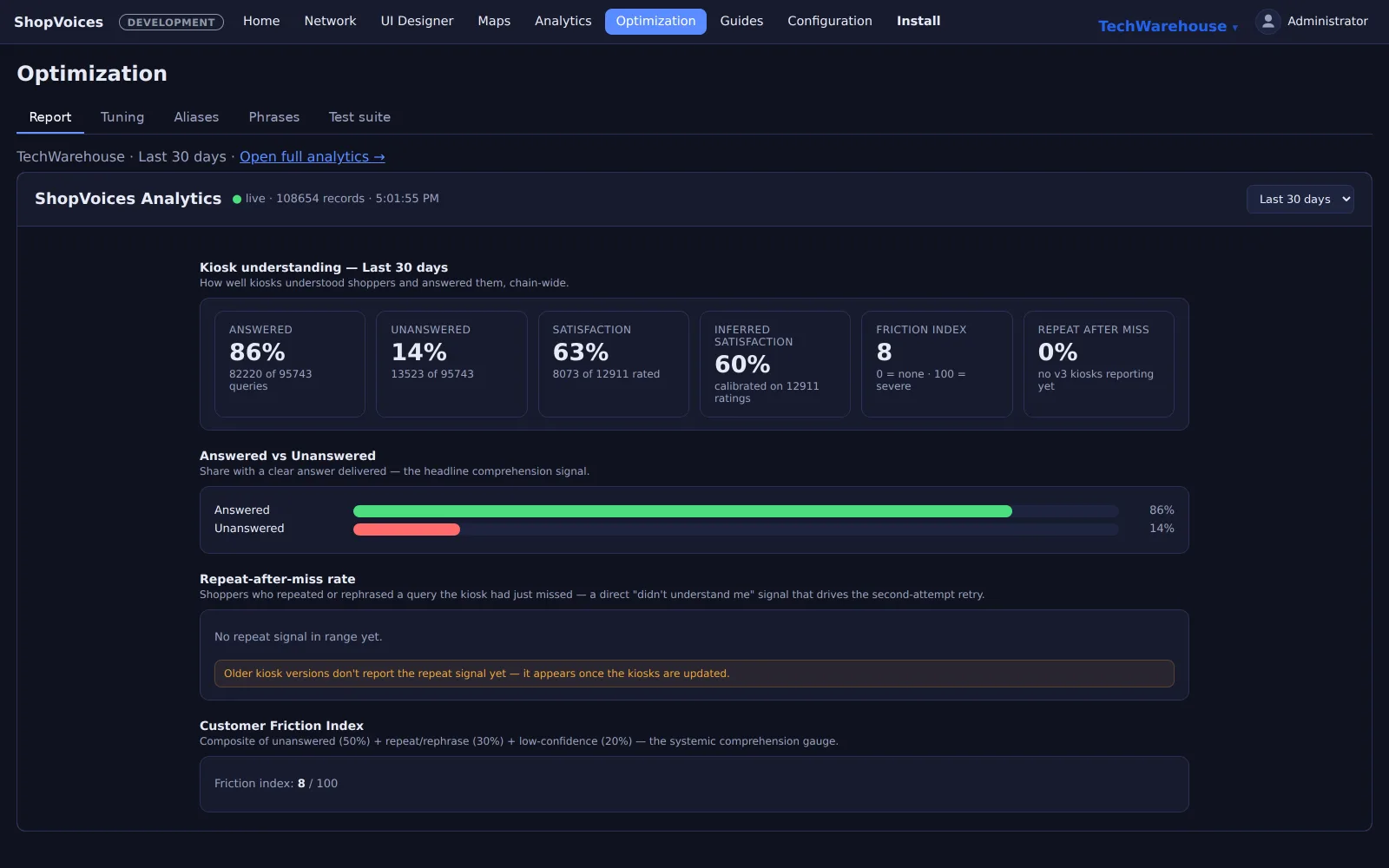
Which languages are actually spoken at each kiosk? Which questions did the assistant struggle with? How quickly did shoppers get an answer? The understanding report puts that in front of you per store — so effort goes where the floor actually needs it, not where someone guessed.
Hear it speak your assortment
A pilot includes tuning to your catalogue — and the measurement that proves it worked. Evaluating? We'll walk you through the workbench itself, live.